Every Day is Saturday

Finding Joy in the Here and Now

The Truth about Lying

Truth

Ok, I’ve been on vacation and since I’ve been back I’ve been really busy, so here’s a little something I wrote a couple of years ago.   Yes, I write stuff like this to amuse myself.  Yes, I know it’s weird.  Here you go:

I recently watched a TED video with a woman named Pamela Meyer, who is an expert at detecting when people are lying.  She started out by explaining how we are all willing participants in most of the lies that are told to us; we know we’re being lied to, and, for various reasons, we collude with the liar to accept the lie.  Most of the lies we tell are simple:  “I’m great!” when we’re not; “It’s nice to meet you” when we couldn’t care less – all that stuff.  Apparently, we lie to our spouses much more than we lie to strangers.  And we all know it, and we do it anyway, because it’s easier, or more polite, or avoids conflict.  Or maybe we’re just lazy – to break the cycle of accepting all the lies told to us, we would have to interrogate the liars – “Are you really great, or did you just say that?”  “Is it really no problem, or have you decided to just do it so I’ll go away?”  Questions like that are, in our current culture, deemed rude or nosy, and nobody likes rude, nosy people.  Apparently we prefer people to lie to our faces.  All the time.

Later in the talk Ms. Meyer starts explaining about the science behind lie detection.  It’s all about involuntary facial tics and body language that can, if observed with the correct frequency or in “clusters”, tell the trained eye that a person is being untruthful.  She showed a couple of videos of people who were both telling the truth and telling lies, and pointed out the “tells” in the liars.  It’s really fascinating and fun, and if you’re like me, makes you wonder if you would be able to fool an expert if you tried.  You start fantasizing about how you wouldn’t smile in that way or cover your mouth like that, or any number of things that would let someone know you weren’t telling the truth.  Of course, most of the lies being told by the people in the video were heinous – one woman had killed her children and told people a stranger had done it – so for the vast majority of us, we (hopefully) would never want or need to know how to tell a lie of that magnitude.  But it makes you wonder.

After I watched the video, I started wondering about something else.  What struck me was how involuntary these physical reactions were; no matter how smooth you are, something will always give you away.  Apparently, our bodies don’t want us to lie.   Our unconscious selves rebel when we are untruthful.  You’ll notice there are no physical “tells” for someone who is telling the truth – except in the case of a fake smile vs. a genuine one.   The physical and psychological imperative to tell the truth is the controlling one, more powerful than our cultural impulse to lie.  Lying, then, is an unnatural act that results in the betrayal of our minds by our bodies.  Isn’t that interesting?

To be caught in a lie is, to the average person, a terrible thing.  We vilify the liars in our midst, demonizing them as unworthy of anyone’s trust, ever again.  It is the unforgivable sin, even worse than the act being lied about most of the time.  And yet we love to be lied to.  Do you really believe everything your favorite politician says is the truth?  Do you really believe if you purchase that product you will be happier and more fulfilled than you are now?

We want to believe the lies, so we invest a tremendous amount of effort into convincing ourselves, and each other, that lies are the truth, and in some cases, the truth is a lie.  We build walls of lies around the things we desperately want to be true, blinding ourselves to any other possibilities.  We don’t ask the questions.  We don’t want to know the answers.  The answers might not be comfortable, so all we do is listen to the people who tell us what we want to hear.   Everyone does it.  We all want to surround ourselves with people who think like we do, who see the world the same way we do – it’s human nature.  But the price of that is often the closing of our minds and the hardening of our hearts.

One of the reasons why we hate the liars that get caught in a lie is that in spite of our deep cultural compulsion to deceive, we all know in our hearts that lying is a bad thing – a knowledge that manifests itself in our bodies’ desire to give us away when we lie.  We raise up people who profess to tell the “unvarnished truth”.  We value “frank, honest” conversations.  We celebrate people who expose their vulnerabilities to the world as having the “courage to tell the truth”.  There is an extreme amount of tension between these two opposing forces.  How do we resolve our compulsion to lie with our desire to know the truth?

As far as I can tell, there are only two ways to find out if someone is lying to your face:  you can either become an expert at lie detection like Pamela Meyer, or you can start asking questions and not stop until you are convinced you’ve gotten the whole story.  But be warned – you might not like what you find.  I think that we, individually and collectively, need to search our hearts for the truth about the truth – do we really want it?  What are we willing to give up to have it?  Would we even recognize it if we saw it?  Do we have that kind of courage, or is that why, when we see someone else telling the truth, we treat it like it’s extraordinary?  Is it really so rare?  Do we even know how to be honest with ourselves and each other, or have we forgotten? 

**********

Thanks for reading my blog!  If you want to know more about me and my journey, check out my book “Everyday is Saturday” on Kindle.  The book is part diary, part memoir, about the first year after I was laid off from my dream job.  I think it has something to say to anyone who is struggling with change.

photo credit: dullhunk via photopin cc

Leave a comment »

Why I think “12 Years a Slave” is a Terrible Movie

 Movie Theatre

Oscar buzz be damned; I hated this film.  I realize that A LOT of people feel just as passionately about it the other way, and that my opinion is just that – an opinion.  But I have good reasons for being pissed off that I lost two hours of my life watching a movie that could have been transformational, but was, for me, a purposeless excursion into voyeurism.   Allow me to explain.

If you break the movie down into its component parts there is a lot to recommend it.  Truly fantastic performances by the entire cast, excellent direction, beautifully photographed. The characters weren’t as multi-dimensional as one would hope, but it’s difficult to create empathy for a slave owner (and Benedict Cumberbatch comes as close as anyone I’ve seen), and possibly too easy to create empathy for the slaves (in one scene a woman cries uncontrollably for her children from whom she was separated, and it rang a bit hollow to me).  Michael Fassbender was mesmerizing in his meanness and madness as another of the main character’s (Solomon Northup) “owners”, and his performance was a real joy.  And Chiwetel Ejiofor who plays Northup is so deft an actor that we see his inner journey plainly on his face; he has no need for words.

Why then do I say I hated this movie?  Not for what it is, but for what it could have been, and wasn’t.  I don’t understand why the filmmakers would choose to make the entire movie about the titular twelve horrific years of slavery endured by Northup and not spend any time showing us what he did AFTER.  Yes, it was unthinkable what happened to this educated, talented, respected man, but come on – we get it!  You’re not telling us anything we didn’t already know, so the only reason I can think for making that choice is that the movie is some sort of vehicle for Brad Pitt who produced it and whose character (who appears in two scenes) waxes eloquent on the evils of slavery and ultimately takes the action that leads to Solomon’s release.  The final scene in the movie is Solomon’s reunion with his family, which is, not unexpectedly, tearful and moving.  Yawn.  Sorry, but yawn.

After the screen fades on the family group hug, a couple of paragraphs appear to tell us that Solomon Northup spent pretty much the rest of his life writing and speaking about the horrors of slavery and pursuing the abolition thereof.  We are told that because of his personal experience the anti-slavery movement gained more traction than had been the case prior to his abduction.

This, to me, is the real story.  Not the suffering – the redemption.  I didn’t want the movie to dwell on the misery; I wanted it to show us how Northup transformed it into something real and lasting.  Show us that his suffering had purpose, that it meant something.  I feel like the movie makers, even in their attempt to honor this man’s story, have failed spectacularly to do what they clearly set out to do.  Yes, he survived his ordeal, and that was a feat of itself.  But, with respect, it’s just the beginning.  Think about Nelson Mandela, another person who was unjustly imprisoned and horribly mistreated.  If his story ended the day he walked out of that prison, if he had just returned home and lived out his days in obscurity, his ordeal would have been quickly forgotten.  The power of Mandela’s story, as well as Northup’s, is in how they didn’t let what happened to them stop them for fighting for what was right.  Neither of these men allowed the memories and the anger about the years they lost overwhelm them; they used it to forward a great purpose.

That’s what I want to see.  That’s the lesson here.  That’s the real story.

I recognize that the movie is based on the book Solomon Northup wrote about his years as a slave.  I’m not suggesting that those years be ignored – indeed, the enormity of his achievement would be diminished if the depth of his suffering was not portrayed.  But to leave us at that moment, before the healing begins, before the recognition that those years didn’t have to be a total waste, that something good could come from it – it felt empty.  That moment, though touching, was not a happy ending.  The movie just ended, and I felt cheated.

So, yes, I hated it because it could have been inspiring, but instead, it was just depressing.  If you want to see a good movie, go see “Rush”.

******

Thanks for reading my blog!  If you want to know more about me and my journey, check out my book “Everyday is Saturday” on Kindle.  The book is part diary, part memoir, about the first year after I was laid off from my dream job.  I think it has something to say to anyone who is struggling with change.

photo credit: gtall1 via photopin cc


2 Comments »

Coming Home

Catawba Ad Bldg 2013

“There is something inherent in us as human beings that naturally draws us to the past.  Something that for some reason makes us recall the events that occurred in times we’ve left behind.  Be it to fill the hole that somehow emerged in our lives, to reacquaint ourselves with something we were separated from, or simply to savor happiness once felt.”

I didn’t write these words; they were written by a college classmate as a Director’s Note.  They would have been printed in the program for a show he directed in the late 1980’s when he was nineteen or twenty years old.  I don’t remember reading them.  I was a college student myself and the past didn’t have the same meaning for me then as it does now.  But they were particularly poignant when I read them again just recently during my college’s Homecoming weekend.

For many years now I have attended Homecoming.  I started going not long after I graduated, and with a few exceptions, I’ve been back every year.  I am not unaware that this devotion to my alma mater is probably perceived by some as kinda pathetic; I get that.  It’s not good to worship the past, and my loyalty could be seen as an indication of an unfulfilling present.   Some of that is true – I do tend to romanticize the past, which makes the present seem sorta dull by comparison – so some of the reasons I am drawn to Homecoming are those that were so beautifully articulated by my classmate twenty-five years ago.  But it’s not the whole story.

There’s something about my college that inspires former students to return year after year; I’m not the only alum to make the trip over and over again, not by a long shot.  At a reception on the Friday evening I stood with a dear friend and a former professor, and we talked about the mystery of our enduring commitment.  We talked about the bonds that are created through the mutual trust that grows out of shared experiences, but that didn’t seem to do it justice.  I confided to my friend that one of the reasons I come back is to see our former professors, some of whom are aging rapidly and most likely won’t be able to attend the Homecoming events much longer.  I come to honor them, to pay my respects for the impact they had on me and my life.  But that’s not the whole story, either.

This year I arrived quite early on Friday to attend an 8:00 am class that was advertised as being open to alumni.  The class was taught by one of my favorite professors, and the look on his face when I walked into his classroom was worth getting up at 3:00 am for the drive.  Afterwards I walked around campus taking pictures; most of the buildings that were there during my time are still there.  It’s a beautiful place, and I strolled around in the sunshine reacquainting myself with the architecture.  Eventually I wound up in the theatre where I had spent so many wonderful hours of my college years, as a performer and a technician.  I sat down in the semi-darkness and let my thoughts drift as I listened to the building breathe.  This is where I feel the most at peace, in the silence of that house.  I was completely alone, but I am never lonely there.  But that is still only a part of the story.

After a while I got up and made my way to the stage.  Tables with memorabilia from the theatre department’s past had been set up in preparation for the reception to be held later that evening, so I spent some time looking at it.  This is where I discovered the Director’s Note I’ve quoted from above, and its immediacy took my breath away.  Reading those words was like holding up a mirror; I could see myself in it so clearly.  But, as pointed as they were, those words still didn’t answer the question of my annual pilgrimage.

At least part of the answer began to come to me as I continued to look through the programs and cast lists and photos on those tables, because I found myself there.  My name, recorded in the history of the theatre department on display.  And not just once; multiple times my name appeared in cast and crew lists, and I recognized a new motivation for why I come back every year.

I come back because I WAS HERE.  I was part of the story of this place, and I will have always been here.  As time goes by, the idea that I’ve left traces of myself that can still be seen becomes more and more important to me, that I have left some sort of impression on a place, like a stamp pressed into soft wax that slowly hardens over time.

I’ve spent chunks of my life in different places – high school, jobs, grad school – but I just sort of passed through.  Sometimes I’ve worked hard to leave traces of myself, but inevitably, they have become obliterated with the passing of time, and any echoes of me have faded.  This is normal, and I don’t worry about it.  So the fact that there is a place in this world where evidence of my presence is permanently preserved is, to me, worth the effort I make to keep the connection alive.

And of course there are the people.  It is a singular joy to look into the eyes of someone with whom you have shared part of your history and see yourself staring back at you.  I experience mutual understanding with other alums that exists at a level usually only found between siblings.  We get each other.  We can talk in the shorthand that comes from taking the knowledge of each other’s past for granted.  This is true even if we weren’t that close while we were in school; even if we didn’t actually know each other then.  It doesn’t matter.  Our common love binds us to each other and to this place.  And it is this love that takes us from the past into the present – the love we feel isn’t then, it’s NOW.  It isn’t nostalgia, it is a living thing.  The most compelling reason I go back is so that I can step into that flow of love and let it surround me.  The love I feel in that place reminds me not of who I was, but who I am.  Apparently I need that reminder once a year.

Photo by Amanda Taylor Brooks 

**********

Thanks for reading my blog!  If you want to know more about me and my journey, check out my book “Everyday is Saturday” on Kindle.  The book is part diary, part memoir, about the first year after I was laid off from my dream job.  I think it has something to say to anyone who is struggling with change.
 

3 Comments »

Actively Disengaged

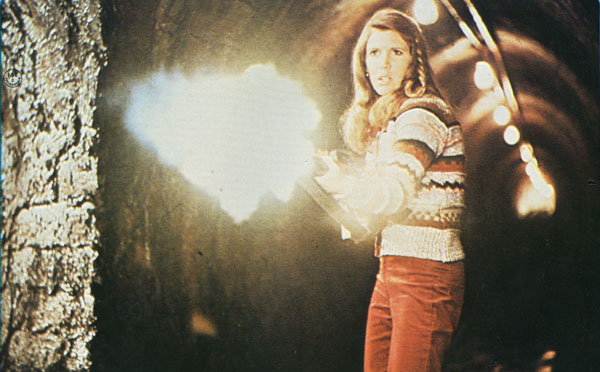
Carrie Fisher Flame Thrower

There are many challenges to being self-employed, but there are so very many benefits.  One of the biggest is that I don’t have to deal with a horrible boss every day.  Yes, sometimes clients can be frustrating, but I only have to deal with them for as long as I’m under contract – as soon as the work is done, the relationship is over.  This is a huge bonus, and one that I am grateful for every day.

Like most people, I’ve had good managers and bad managers.  Sometimes a bad manager is an otherwise great person; they just have no business managing people.  Sometimes a good manager is cold and standoffish, but they know how to keep their people engaged.

That’s the word they use now for caring about your work – “engagement.”  A recent Forbes magazine article describes a sweeping survey performed by the Gallup organization that reveals that only thirty percent of American workers describe themselves as “engaged” in their work (http://www.forbes.com/sites/victorlipman/2013/09/23/surprising-disturbing-facts-from-the-mother-of-all-employee-engagement-surveys/).

Engaged.  I think that’s an interesting word; it evokes thoughts of passion, love, and commitment, which, in my opinion, is asking a bit much for you to feel about your job, but hey, that’s me.  “Engagement” in workplace terms means that employees are emotionally connected to their work.  They care.

If you don’t care about your work you’re considered to be “disengaged” or “actively disengaged”.  Seventy percent of the over 350,000 people surveyed fell into one of these two categories – a pretty staggering number.

So what does it mean if you’re “actively disengaged”?  That’s more than being just “disengaged”, which is showing up and going through the motions.  Adding “Actively” would indicate that you’re putting some energy into your disengagement.  Actively Disengaged is Carrie Fisher in “The Blues Brothers” after John Belushi jilts her at the altar; it’s flamethrowers and rocket launchers.  It’s disengagement on purpose.  It’s trying to find ways to sabotage your company and your co-workers.  What could possibly prompt someone to work harder at being disengaged than at their job?  According to the Gallup poll, the overwhelming reason is because they have a horrible boss.

I don’t doubt this for a minute.  If you’ve had a horrible boss, you probably don’t either.  A bad boss can suck all of the joy even out of a job you love – even if you like your co-workers, even if you’re making good money and your commute isn’t too bad.  The dread of what mean spirited, spiteful, demeaning, undermining thing your supervisor has in store for you makes going to work a daily nightmare for millions of people.   And it’s killing our businesses – the article estimates that up to $550 BILLION dollars of lost productivity each year can be ascribed to the impact of bad bosses.

And we don’t need to talk about how the bad boss effect bleeds over into our home lives, do we?  How can we be relaxed and happy and present in our marriages and with our children when we spend the majority of our waking hours in an environment that is overtly hostile?

I don’t know if the leaders of corporate America will take notice of this survey.  Maybe they will – the lost productivity figure should get some attention at least.  But most likely they’ll do what they always do, which is talk about it and meet about it and come up with the usual corporate bullshit, and nothing will change.  Not really, not how it needs to change.  So if the answer isn’t with the “leadership”, what can the poor employees do?  As you’ve probably surmised by now, I have a suggestion.

It’s time for employees to stop being afraid.  The system works on fear – fear of losing your job, mostly.  If you have a family to support, I understand that fear.  But silence only perpetuates the problem.  That’s how bullies get away with it – no one is willing to stand up to them and get their face punched in.  And you have to be willing to take the heat.  There is real risk in standing up for yourself.  You can mitigate some of that risk if you can convince your colleagues to join you, but that doesn’t mean you’ll win.  If you do succeed in taking down your bad boss it’s very likely you’ll get taken out, too – nobody likes a troublemaker.  I speak from experience.

The alternative to taking action – legal, ethical, non-violent action – is to do nothing and hope your life gets better.  And it might – I’ve seen karma do its work.  But you can’t rely on it.

So this is the choice: take a stand or stop complaining.  I know that often in these situations you feel trapped; you need your job to pay your bills.   You feel like you can’t do anything to change your situation.  But you can.  Not easily, not without risk.  But if you do nothing, risk nothing, then nothing is what will happen.

I’m not trying to make you feel like a coward for choosing to keep your head down – I understand completely.  But I can tell you for sure that losing your job because you took a stand is not the end of the world.  I know this because that’s what happened to me – I stood up and, ultimately, got taken out.  Would I do it again?  Probably.  Do I regret it?  Absolutely not.  I have found so much more than I lost.

So, if you work for a horrible boss, start keeping a log of the bad behavior.  Find others who will support you.  Take your concerns to HR.  Talk to an employment lawyer.  Stand up for yourself.  If your boss is just a bully they might back down; most bullies are cowards.  Be prepared for retaliation, but move ahead anyway.  Take hope in the fact that today there is much more awareness of the impact of bad bosses, so there’s an increased possibility that your concerns will be taken seriously.  And if none of that works, quit.  And tell them why.   You might not get things changed for yourself, but your efforts may help others, and that is always worth doing.  Just don’t do nothing.

**********

Thanks for reading my blog!  If you want to know more about me and my journey, check out my book “Everyday is Saturday” on Kindle.  The book is part diary, part memoir, about the first year after I was laid off from my dream job.  I think it has something to say to anyone who is struggling with change.

Leave a comment »

Politics

Flag

As my friends know, I don’t have a whole lot to say about politics.  Not because I don’t have opinions – I do.  I vote every time I get a chance, and I’m proud to participate in the democratic process.  I believe strongly that the government of the United States of America affords the greatest protections to all of its citizens under our system of federal, state and local laws.  It is far from perfect, but for the most part, we as Americans still can count on our inalienable right to life, liberty and the pursuit of happiness, without undue interference from our neighbors or our government.  If you don’t believe that’s the case, go travel around.  Get accused of a crime in India or Singapore or Russia and then see what you think about our laws.  And don’t talk to me about the NSA.  They aren’t reading your email.  They aren’t interested in you.

I don’t talk about politics or religion on Facebook or on this blog because I don’t see that there’s any point to it.  I think it’s almost impossible in this medium to a) persuade someone that your opinion is the correct one, or b) have a truly meaningful conversation.  If I’m going to have a discussion with you about politics or religion (and believe me, I really don’t want to), then I’ll do it when we’re sitting down, face to face, with either a cup of coffee or a glass of wine in our hands.

So, I’m not actually going to talk about politics.  I am certainly not going to join the finger-pointing parade.   I don’t have anything to say about it that hasn’t been said, is being said, or will be said.

This is what I think about politics:

It’s not important.

Before you go getting all upset, hear me out.  I’m not suggesting that we shouldn’t care about who gets elected or what we believe about life – we should.  What I am saying is that we’ve become addicted to arguing about it, and blinded by our anger.

I want you to ask yourself, to ask your heart, why you are so angry with people whose outlook on the issues of the day are different from yours?  Why do you get so mad it makes you want to scream at them?  What makes you feel such hatred towards them?  Why do you go looking for “evidence” of their “lies” on the internet (which is hardly a bastion of unbiased truth)?  I ask you these questions because they are the questions I ask myself.  I’m no saint – I struggle daily with my anger towards those who support programs that I believe are actively harmful to our society and to people I know and love.  It bewilders me, and my emotions respond with impotent rage.

But raging against the forces at work doesn’t change anything.  It also has the negative effect of changing my focus from what’s truly important in life to the argument itself, allowing my emotions to dictate my actions.  One way I use to avoid this cycle of overreaction is to judge the relative importance of any divisive issue by this simple yardstick:  will this thing, whatever it is (gay marriage, special local option sales tax, Obamacare) separate me from my loved ones?  Will it keep me from showing compassion to my fellow man?  If the answer is “No”, then it isn’t important.  You may be thinking “Well, by that measure, you’re saying that none of these issues is important!”

You would be right.  That’s exactly what I’m saying.

I believe that the only thing that we should be concerned about is how we treat each other.  If we aren’t treating our fellow man with kindness and compassion, we are doing wrong.  I’m so tired of the hatefulness that we have come to accept as “the way things are”, the greed and lust for power that leads our elected officials to behave like spoiled children, and the intractableness of opinions that divide friends and families. I’m tired of it, but none that stuff actually prevents me from loving my fellow man.  It’s just noise.

So until the next time I get to vote for people who support my values, I’ve decided to try something else.  I’ve decided that I will focus on what I can do, today and every day, to make the world a better place.  I can’t yell and jump up and down and change peoples’ hearts and minds, but what I can do is choose not to engage in the hate fest.  I can decide to continue to love my friends with whom I emphatically disagree.  I can choose to be kind.  Getting angry only perpetuates the problem, and keeps us on this downward path.

And one of the results of taking this path is now right in front of us.  The fact that the federal government has mostly ceased to function is terrible.  However, it isn’t the fault of the President or of Congress.

It’s our fault.  We put those politicians there.  Right now you may be thinking that YOU didn’t vote for the people who are causing all the trouble, so you’re not responsible, but I’m telling you that it doesn’t matter if you did or not.  Something about how we’ve gone about doing things in the past forty years or so has created the climate we now find ourselves in, so yes, all of us, me included, is responsible for the gigantic pile of crap currently located in our nation’s capital.

So it’s up to us to fix it.  What we want for ourselves and for our country will be manifested by how we treat each other.  You must be willing to forgive someone who you think doesn’t deserve it, to try to understand someone who you believe with your whole heart to be wrong, and to love the people you believe are destroying the country.  These are the choices we all must make; not between Republican and Democrat, but between Judgment and Grace.

It is only when we change our focus from our need to be right to our desire to understand can we move beyond this place in our history.  We all need to stop worrying about politics and start looking for things we can do, right now, to break the cycle.  If we stopped fueling the engine of hatred and divisiveness, it will slow down, and eventually, it will come to a halt.  Ignore the idiots in Washington.  They’re like children throwing a temper tantrum – if you stop engaging, they’ll shut up and get on with it.

The hardest part?  You have to do it whether the “other side” does it or not.  This is how it works.  Jesus knew it.  Gandhi knew it.  Dr. Martin Luther King, Jr. knew it.  The road will be hard, there will be setbacks, and people will take advantage of your seeming “passivity”.  But it is the only way to heal the divisions in our relationships and in our country.  We must choose love over hate and compassion over power.

What will you choose?

*************************************************

Thanks for reading my blog!  If you want to know more about me and my journey, check out my book “Everyday is Saturday” on Kindle.  The book is part diary, part memoir, about the first year after I was laid off from my dream job.  I think it has something to say to anyone who is struggling with change.

photo credit: Micky** via photopin cc

2 Comments »

What If?

What If

I’ve had some encouraging signs of late that my employment situation might be taking a turn for the better.  I’ve been contacted by a couple of friends who have offered me gigs, short ones, but paying gigs nonetheless, which is a huge improvement over what has been happening for months now, which is a whole lot of nothing.  Last week I completed my last contract of the year, and the client (instead of doing what I all but expected them to do which was tell me they didn’t need me anymore) might actually hire me to run the whole show next year instead of just the piece I’ve been doing for the last three.  I have also been added to a resource list for future technical director gigs through the audio visual company I’ve been using which is fantastic because I love that work and it would most likely mean some travel which, even though it wouldn’t be to any exotic locations, I would welcome because I miss going places terribly.  I’ve also been promised that my friend for whom I do copywriting work has a lot of stuff to keep me busy over the next couple of months.  So, all in all, things are looking up.

When I get a break in the weather like this it allows me to step back from myself and gain some perspective on where my head has been.  At times like these I play a game I call “What If?”  This is how it goes:

I start by asking myself a series of questions:

“What if I stopped worrying about how much I’m not working?”

“What if I stopped obsessing about how we’re going to pay the bills?”

“What if I stopped being angry that I can’t afford to buy new clothes/shoes/anything?”

You get the idea.

Next, I close my eyes and imagine what it would be like to stop worrying/obsessing/being angry about all of this stuff.  I empty my mind of the anxiety and pressure of my concerns.

I know what you’re thinking, and I think it, too:  Denial is more than just a river in Egypt.  This is not an attempt to deny the reality of my financial situation or my need to be employed or any of it.  What I am doing is giving myself permission, even if it’s just for a few minutes, to feel what it would be like to stop worrying.

And when I do, the result is amazing – I suddenly feel light, unburdened – and I find I have the capacity for joy.

I think we live in a complicated world that is full of noise, and motion, and pressure.  I get caught up in it, forgetting to stop and look around me.  All too often I allow my anxiety to overwhelm me and rob me of enjoying the many good things in my life.  The cycle is insidious, and I don’t realize how down I’ve actually become.

I want to break the cycle.  I want to get up every day and look at it as a gift to be enjoyed.  I want to stop focusing on what life owes me, and start focusing on what I can give.  I want kindness and compassion to be my first response.   I want my better nature to be in control.

I can do all of these things whether I have a job or not.  I don’t have to wait for my life circumstances to improve before I can be happy.  Life will always be a struggle – as our context changes we just get hit with new sets of problems.  The trick is to find that peace within you that can’t be shaken.  I’ve found that the beginning of that peace comes when I stop worrying.  After a while, the anxiety eases; this of course makes it easier to get things done, which lowers my anxiety, allowing me to get more done, etc., etc.

So the choice is between the vicious cycle or the virtuous one.  The first is hard to break; the second, easy to ignore.  But this is the real battle – the one that happens in my heart and mind every day.  I have found that the struggle to be fully alive and present is so much harder than figuring out how to earn a living.

**************************************

Thanks for reading my blog!  If you want to know more about me and my journey, check out my book “Everyday is Saturday” on Kindle.   The book is part diary, part memoir, and chronicles the first year after I was suddenly laid off from my dream job.  I think it has something to say to anyone who is struggling with change.
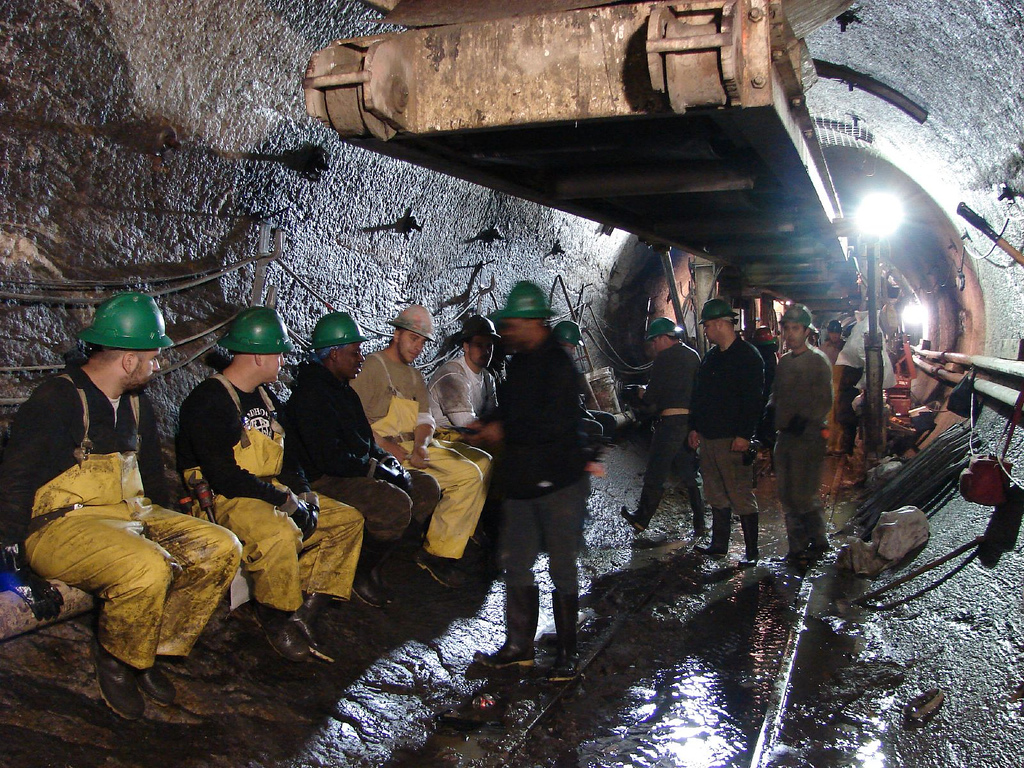
photo credit: Martin Gommel via photopin cc

Leave a comment »

Working for a Living

miners
work
wərk/
noun
             1.  activity involving mental or physical effort done in order to achieve a purpose or result.
  • 2.  mental or physical activity as a means of earning income; employment.

I’ve been thinking a lot about work lately.  That’s an understatement – I think about work all the time.  As in my lack of it, how to get it, and what kind I want to do.  Lately I’ve been ruminating on what I would be willing to do in order to bring in some steady money, which is a reflection of the financial realities in which I now find myself.  The answer to that question is pretty much anything not immoral, illegal or fattening (although I might bend on the illegal in the right circumstances).

“Work is love made visible. And if you cannot work with love but only with distaste, it is better that you should leave your work and sit at the gate of the temple and take alms of those who work with joy.”     Khalil Gibran

The above definition of work as a noun seems to imply there is an either-or choice to be made; the meaning of work is either “to achieve a purpose or result” or “as a means of earning income”.  Of course you can do both, but it often seems like we have to choose between doing purposeful work we love or making a living.

 “Do not hire a man who does your work for money, but him who does it for love of it.”   Henry David Thoreau

I had a really good day yesterday.  I had been invited to do work that I love and that I am good at.  I put in a lot of thought and effort into my contribution.  After the public presentation I was told what a fantastic job I had done.  I received an email at 1:00 am this morning to tell me how much people loved what I did.  This kind of reaction to me and my capabilities is incredibly validating, and I felt amazing afterwards.  But it didn’t pay me a dime.  It may lead to other things, but for now, all I got was a warm heart and an empty pocket.

“I think the person who takes a job in order to live – that is to say, for the money – has turned himself into a slave.”    Joseph Campbell

The other thing that happened yesterday is that, once again, I was reminded how beneficial it is to get out and be with people.  When you do that, it creates energy.  When I get out and meet people it seems like a beacon is lit to announce “Amanda is here!”, and all of a sudden, unexpected things happen.  For example, during the day yesterday I got a call from a friend who had a gig for next week and she thought of me.  It was wonderful to know that she’s keeping an eye out, but wouldn’t you know it, next week I actually already have work!  I would have taken that gig in a heartbeat (even though it sounded really boring) if it had been any other time.  But even though that didn’t work out, it reinforced to me how much I have got to find a way to get out of the house on a regular basis.

“It is the working man who is the happy man. It is the idle man who is the miserable man.”    Benjamin Franklin

I want to work.  I want to do meaningful, purposeful, rewarding work and get paid for it.  I know what that’s like – I’ve done it before.  Knowing that I have so much to give and nowhere to give it is not only frustrating, it is debilitating.  It’s wonderful to have others acknowledge my talent.  I know I have to hang in there.  I know I need to find a part time job to keep the lights on, and I will.  But I’m terrified of having to do work that I don’t love, just for a paycheck.  I know what that’s like, too.  I will do it because I don’t see that I have a choice, and I’ll be glad of it.  But I’ve come a long way – I don’t want to go back.  I’m clinging to the promise that if I keep doing what I love the money will follow.  Well, it better hurry up.

“Far and away the best prize that life has to offer is the chance to work hard at work worth doing.”  Theodore Roosevelt

photo credit: Chris Corbett via photopin cc

Leave a comment »

The Case for Being Average

L&N customer service

Today I attended a presentation about how to give fantastic customer service.  At the heart of the speaker’s message was the notion that we have to engage our clients on an individual level and treat everyone with whom we come into contact as THE MOST IMPORTANT PERSON EVER!  The speaker was skilled – she knew when to make the audience laugh and when to drive home her points – but I’ve heard the same message from others.  I’ve seen the same video of the gorilla walking through the circle of people bouncing the basketball (spoilers!), and I know the quote “I’ve learned that people will forget what you said, people will forget what you did, but people will never forget how you made them feel” by heart.  It’s a good message, one that all of us should live by, but even as I was trying to pay attention to the presentation I could hear my cynical self (I’ll call her Cynthia) chatting away in my ear:

“You know all this.  This is not new.  Why does everyone act like this is new information?  Doesn’t everybody know this already?”

Cynthia’s a real bitch.  But Cynthia has a point.

If everybody knows that in order to stand out they have to give memorable, emotionally authentic customer service, then why oh why are we STILL talking about the fact that 79% of customers in any industry you care to name only rate their experience as “Average” or lower?  If we all know how to give great customer service, why aren’t we doing it?

OK, I get it, sincerity is hard to fake.  Just kidding – everybody fakes sincerity, which is a waste of time because most people have the emotional intelligence to know when someone is being insincere.  We put up with it because it’s how the whole thing works even when we inwardly yearn for people to mean what they say, to break out of the pack and be extraordinary.  At least, that’s what we say we want.

I have another theory, and you’re not going to like it.  I don’t like it.

My theory is this:  it’s the average people that, on average, get ahead, and that’s why we live in an average world.  I believe that the system is weighted in favor of the “good enough” crowd, the folks who don’t “rock the boat”.  The brilliant people are the disrupters.  Their insistence on constant improvement, their unwillingness to be satisfied, their devotion to excellence – well, frankly, it’s a pain in the ass.  They challenge the status quo, and sometimes the leadership (which are often the same thing).  They make everybody else look bad by comparison.  They blow the curve. They’re the showoffs, the workaholics, the know-it-alls.  And nobody likes an insufferable know-it-all, right?

I’m not saying that there aren’t instances of extraordinary people in customer-facing roles – there are.  But they are the exception, and they’re the ones that get talked about in keynote speeches.  It’s the rest of the crowd who make the exceptions exceptional.   And we, by accepting lethargic service, exacerbate the problem.  We are so desensitized to the crappy way we get treated by the people whose goods and services we are buying that these businesses have come to believe, rightly, that they can treat us like that and still make money. And if anyone inside the organization has the nerve to stand up and say “No!  This is wrong!  We should be better!”, they are silenced.

I also think that many people don’t know the difference between average and extraordinary.  They just can’t see it, so they go with the expected, the nonthreatening.  Exceptional people require those around them to raise their game, and that can be confronting.  Some folks would rather just not have to deal with it.  So they reinforce the average to the surprise and dismay of the exceptional.

I’m also going to say this.  Sometimes there’s not a damn thing you can do to make a customer love you.   I have been in a situation where I know I gave great service, but my client turned on me, and she never, ever told me what I had done to change her from loving me one day to freezing me out the next.  I did something, I must have.  I’ve gone back over every conversation, every interaction, and I know I wasn’t rude or disrespectful or anything that could possibly have justified the instantaneous about-face.  Whatever it was it must have tripped some switch in her own mind, and from that moment on, we were through.  Since she wouldn’t talk about it there was nothing I could do.

In those instances it’s best to fire your customer (even if they fire you first), because you’ll drive yourself crazy trying to please someone who cannot be pleased.  Or pleasing them would require you to behave in a way that isn’t who you want to be.  When this happens it’s confusing and painful and it goes against everything we’re told about how if you give exceptional service you’ll be remembered and people will be loyal to you.  My friends, I am very sorry to say this, but that isn’t always true, and you need to be prepared for the disappointment.  I wasn’t.

So, if being exceptional is going to get us ridiculed, ostracized, and possibly fired, should’t we just be average?  That is the choice we must make, and even though I seem to be railing against average, I understand its allure.  I understand why people choose, daily, to go along with the scheme.  I understand the pressure of wanting to keep your job and your friends and your customers by being as amenable and nonthreatening as possible.  But I can’t help but be sad about it.  What a wonderful world this would be if we all stopped expecting an average life and started demanding an extraordinary one.  The 79% would be amazing, and we’d listen to keynote speakers talk about how to set the other 21% free.

Do I think I’m exceptional?  Yes, sometimes I do.  There is no virtue in false modesty; sometimes I totally rock.  Other times I don’t.  But the only time I truly fail is when I begin to accept the average in myself.

photo credit: mod as hell via photopin cc

Leave a comment »

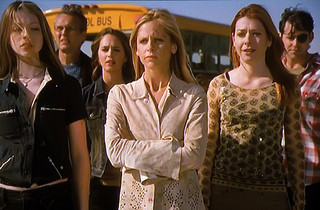
Why I Miss Buffy the Vampire Slayer

Buffy

For a few months during the first year after I was laid off, I found a TV channel that showed several episodes of “Buffy the Vampire Slayer” back-to-back late at night.  At the time I was suffering from insomnia, so I was staying up late so I would be tired enough to fall asleep when I finally went up to bed.  Finding “Buffy” re-runs was both a blessing and a curse; it was a terrific distraction from the non-stop internal monologue I was having about my situation, but it ensured I wouldn’t get to bed until the wee hours every day, which probably wasn’t helpful.

As television shows go, “Buffy” had it all – great writing, characters you cared about as they grew and changed, and solid performances by a terrific ensemble cast.  The reason “Buffy” was so good is that the monsters and magic and vampires were just a vehicle for the real story, which was about life and love and loss and hope and redemption – universal themes that everyone can relate to.

The thing is, I don’t know if “Buffy” would resonate as much if it was just beginning today.  Today we celebrate the anti-heroes, the bad-guys-you-can’t-help-but-root-for types.  It’s Tony Soprano, Dexter and Walter White that fascinate us now.  I’m sure there’s some deep meaning in this trend, but I don’t know what that could be.

What I do know is that for me at that time, “Buffy” represented a simpler world I wished I could be a part of.

Buffy Summers, reluctant hero though she was, knew her enemy and who she was fighting to protect.  At the core of the show was an ongoing battle between good and evil.  Fighting the good fight was difficult and required sacrifice; sometimes those sacrifices were heartbreaking.  Sometimes good characters succumbed to evil, worn out by grief and constant striving, or seduced by visions of earthly power.  Most of the time the lost found their way back, redeemed by the love and faith of their friends.  But if they didn’t, you can be sure they got their comeuppance.  That was how it worked – good always triumphed over evil.

I have never believed that people are either good or bad – human beings are far more complicated than that, and we live with a certain amount of moral ambiguity as a matter of course.   This is not necessarily a bad thing; understanding the complexities of the human heart makes us more willing to forgive others’ faults and show mercy when someone stumbles.  If Tony Soprano’s legacy is that we all become a little less judgmental of each other then I think that’s a good thing.

But I miss the clarity of Buffy’s world.  I miss the black-and-white nature of that universe, where evil was an ugly monster that could be vanquished with a wooden stake.  Life, while not easy, was at least knowable.

During those months as I struggled with my own confusion and sense of loss I would watch Buffy and think how much more straightforward her life seemed.  In our world, evil doesn’t rush at you, claws out.  Your life’s work isn’t as simple as a choice between being a good guy or a bad guy.  I longed to have a life that was clear-cut.  I longed to know what I was supposed to do next.  I knew my answers couldn’t be found in a television drama, but it was a relief to escape the chaos for a time.

That’s why I still miss Buffy.  It would be so much easier if life was just a straight-up fight, but my kind of demons can’t be dispatched with a wooden stake.  Frustration, self doubt, worry, guilt – there is no spell to consign these tormentors to another dimension.  But one thing Buffy knew in her world that does work in this one, and that is to never give up.  Keep your loved ones close and keep fighting.  Because if you do, you will prevail.  Perseverance is rewarded.  Good always wins.

photo credit: <a href=”http://www.flickr.com/photos/crusey/443763509/”>Tc7</a&gt; via <a href=”http://photopin.com”>photopin</a&gt; <a href=”http://creativecommons.org/licenses/by-nd/2.0/”>cc</a&gt;

1 Comment »

A Break from Navel Gazing

I’m conscious of the fact that this blog, by it’s nature, is a vehicle for self-exploration.  I write it because I hope that someone out there can relate to what I’m going through and be encouraged, or inspired – or even just relieved that they’re not as totally confused about life as I am.

However, I feel the need to take a break from the navel gazing to talk about some of the cool people, books and resources I’ve found as I’ve begun to explore life as a writer.

Over Labor Day weekend I attended the Decatur Book Festival (@dbookfestival), which has become the largest festival of its kind in the U.S.   It’s an amazing event that draws authors and poets and bibliophiles from all over the world.  Over the two days of the festival there are dozens of panel discussions and workshops on a wide rage of topics.  It’s free.  There were 75,000 people there this year.

The first session I chose was about writing memoir and intimacy.  It was led by two authors, Beth Kephart (@bethkephart) and Stacey D’Erasmo.  Beth (I call her “Beth” now, because I’ve met her) has written several memoirs and novels and teaches a class on memoir writing.  Her new book is called “Handling the Truth; on the writing of memoir”, which I purchased and had her sign.  I’m so very glad I found it before I got too much further into the writing of my second book, because it contains a wealth of good advice and information for anyone interested in the genre.  In the back of the book she lists a number of memoirs that she recommends budding memoirists read, and I’m working my way through a couple of them now.

I also attended a packed session featuring the best-selling authors Kathy Reichs and Karin Slaughter.  They were funny, inspiring, and amazingly normal.

The last session I went to was the launch of the 2013 edition of the yearly anthology “The Best American Poetry”.   On the stage were this year’s guest editor who chose the 75 poems included in the book, the series editor, and four of the featured poets.  They took turns reading poems from the book; the first time, they read their own, and the second time they read someone else’s poem.  It was a wonderful experience, especially for me since my interest in poetry goes back almost three whole weeks (it reminds me of when I turned 20 years old and suddenly liked yellow squash, when I had never liked it before).  I bought the anthology and have thoroughly enjoyed it.

That’s the literary end of things.  I have also happily discovered Kristen Lamb (@kristenlambtx) who is an expert at harnessing the power of social media for authors.   She’s written books, she blogs, and she’s started a networking and support group for writers she calls “WANA” (for “We Are Not Alone”).   Her new book “Rise of the Machines:  Human Authors in a Digital World” is essential reading for any author who wants to find an audience for their work.   She is funny and down-to-earth, and I strongly recommend that all aspiring writers listen to what she has to say.

Finally, and probably most importantly, on the recommendation of a friend I read “The War of Art” by Steven Pressfield.  It’s a short book; not that many pages, and some of the “chapters” are one or two paragraphs long.  Even though it’s a quick read it is the most important book I’ve read in the last few weeks.  I won’t try to describe it, but I will say that if you feel you are being called to do something and you have not answered the call for all of the reasons that we tend to think of as “practical”, you need to read this book.  It isn’t just for artists; the principles apply to anyone who has a heart’s desire to bring something new into being, whether that’s a business or a novel or a painting.  The enemy here is our own resistance to following our hearts, and the enemy is strong.

I’m not saying that the books and authors and resources I’ve found are for everyone, but I have certainly been challenged and inspired by them.  I think everyone should go looking for ways to stretch themselves from time to time.  It isn’t comfortable; some of what I’ve been reading has made me extremely nervous.  But you can’t grow if you don’t step out of your comfort zone, and there is so much out there to explore!  I’ll leave you with a quote from the Dalai Lama that Pressfield uses to open his book:  “The enemy is a very good teacher.”

Leave a comment »